
How to Search the Norman County Court Docket
Know what you are hunting for before you touch a keyboard. The MCRO Case Search is the main Norman County court docket route, and it takes a party name, a business, an attorney, a full case number, or a full citation number. Once a case opens, Case Details shows the online Register of Actions plus any public documents the court has released. A complete number works best. Numbers on the public calendar follow the pattern of 54-CR-25-231, but always copy the number exactly rather than piecing it together. When you know the case belongs in Norman County, apply the county filter. A statewide sweep helps if the filing might sit in another county. Remember that MCRO results are uncertified and can be incomplete. Treat any Norman County court docket result as a starting point for research, not proof of an event or an outcome.
- Open MCRO Case Search and accept the public-search terms.
- Choose name, business, attorney, case-number, or citation-number mode.
- Select Norman County when the local court is known, then use the available category and status filters.
- Open Case Details and read the Register of Actions, hearings, dispositions, and document index together.
- Use the case number or document index when asking Norman County Court Administration for a public or certified copy.
Norman County MCRO Docket Routes
MCRO offers four separate public search tools, and each answers a different question. Case Search locates a case and opens its Register of Actions. Document Search pulls public documents when you enter a case number without spaces. Hearing Search runs on a name, case number, judicial officer, attorney, date range, category, or location. Judgment Search covers only docketed money judgments and their satisfactions. Picking the right Norman County court docket route saves time, and it keeps you from mistaking a judgment index for the whole civil file.
| MCRO route | Best use | Important limit |
|---|---|---|
| Case Search | Find a case and its Register of Actions | Name results may not show every pending criminal case |
| Document Search | Look for a public document by complete number | An indexed document may not be viewable remotely |
| Hearing Search | Find a setting by person, case, officer, or attorney | Confirm against the current Norman calendar |
| Judgment Search | Find docketed money judgments and satisfactions | It is not the whole case history |
A Minnesota Judicial Branch overview of MCRO walks through these channels and their access limits. The split matters. One Norman County court record can carry a case history, a hearing, a document index, and a judgment entry, and no single search screen shows them all.
What a Court Docket Shows
The Register of Actions is the chronological court history behind every Norman County court docket entry. Depending on what is public, it can list the case number, title, type, filing date, venue, judicial officer, status, parties, hearings, events, charges or claims, documents, dispositions, and financial information. Read the case type carefully. A criminal label is not a conviction. A civil filing is not a judgment. Keep those two distinctions in mind every time you open a docket.
| Case number | The unique search key. Preserve the complete number for document and clerk requests. |
|---|---|
| Parties | Displayed case roles and attorney information, subject to access rules. |
| Case events | Dated filings, orders, motions, hearings, and other procedural entries. |
| Hearing settings | Past or upcoming date, time, type, location or connection, and officer when shown. |
| Document index | An index number for an event. It does not promise a downloadable attachment. |
| Disposition | The recorded case result, which must be read with the underlying event history. |
Minnesota court-record access information is blunt on one point: online material is unofficial. For a certified record, go to the local court itself, not an MCRO download.
Norman County Court Register
Work through a Norman County Register of Actions in order. Start with Case Information and the case status. Then move to the events, hearings, and disposition fields. A docket entry may note that a motion was filed without showing its text. Likewise, a document index can name a filing while no public copy sits online. That careful sequence pays off later. Use it when you want a hearing, a filing, or a record from an older case.
- Case event
- A dated procedural entry, filing, hearing, order, or other court action.
- Disposition
- The recorded resolution, such as a dismissal, judgment, plea, conviction, or settlement.
- Continuance or reset
- A changed setting. It does not itself resolve the case.
- Satisfaction
- An entry that a docketed judgment was paid, released, or otherwise satisfied as recorded.
One caution belongs here. If a Norman County court docket shows an active-warrant indicator, slow down. The official MCRO material warns that a party-level flag can tie to a different case. Only case-specific warrant information supports any conclusion about the case in front of you.
Which Courts Keep Dockets
Norman County District Court belongs to the Ninth Judicial District. It holds original jurisdiction over local civil, family, probate, juvenile, criminal, and traffic cases. Its Register of Actions and daily calendar anchor the Norman County court docket record. Appeals and federal matters live elsewhere. Minnesota Court of Appeals records and federal cases sit in separate systems, even when the case began in Norman County.
| Court or system | Record coverage | Where to start |
|---|---|---|
| Norman County District Court | Local civil, criminal, family, probate, juvenile, and traffic matters | MCRO, daily calendar, or Court Administration |
| Minnesota Court of Appeals | Most appeals from District Court | State appellate court records, separate from the county calendar |
| U.S. District Court, District of Minnesota | Federal civil and criminal cases | PACER or CM/ECF, not MCRO |
The U.S. District Court for the District of Minnesota is its own jurisdiction. A state court docket search will not return federal filings, bankruptcy matters, or federal appellate dockets.
Norman County Court Docket Channels
The strongest Norman County court docket search layers several channels together. Grab the daily PDF for a current posted setting. Pull the case history from MCRO Case Search. Turn to Hearing Search when the case number is unknown but a party, officer, or date is in hand. At the courthouse, public records may be inspected where they are kept during regular hours, subject to the Rules of Public Access. Court Administration is the local fallback for certified copies, records left off the internet, and access questions.
Each channel answers a different question. The public PDF is a daily hearing list, not a complete case file. MCRO does not accept filings, schedule hearings, certify records, or take fine payments. Pick up the phone when a Norman County court docket entry is missing, a hearing seems changed, or a restricted-record question needs a local answer.
The official Norman court page lists the local court contact and links the daily calendar. It also notes free surface and on-street parking. The page does not state the building location or the hours for a public terminal, so confirm those practical details before making an in-person records trip.
Finding Court Dates and Settings
Each business day, the Norman daily public court calendar goes up at 7:00 a.m. It gets refreshed hourly. The file is a PDF, so you can search it with text-find. For each setting it lists party name, hearing location, hearing date, time, and judicial officer. It also lists hearing type, connection type, and case number. The location field may read Court Room 1 or Zoom. A Zoom label, though, is not an authorized public meeting link.
Work from a current copy and cross-check it against MCRO Hearing Search. Court staff point to the printed calendars. Those posted outside courtrooms and in public lobbies are the freshest version. Confidential and nonremote matters never appear. A missing item does not mean it was cancelled. The Norman County court calendar page walks through a fuller date-by-date method.
Norman County Court Calendar Changes
A calendar label tells you the setting, not the result. Initial Appearance - Rule 8, arraignment, omnibus hearing, pre-trial, review hearing, probation violation hearing, conciliation hearing, and generic hearing. Each plays a different procedural role. A reset or continuance only means the date moved. Nothing there decides a charge, a claim, or the case itself.
Pull the Norman County court docket again on the day of the hearing. If the calendar conflicts with an earlier notice, call Norman County Court Administration. Do that before you appear. Remote settings call for the court's own authorized instructions. A connection-type field alone never creates a public link. The daily calendar can shift after posting, so a same-day check is worth it when travel or attendance hangs on the date.
Public Access to Dockets
Norman County dockets have one main access framework. It rests mainly on the Minnesota Rules of Public Access to Records of the Judicial Branch. The Minnesota Government Data Practices Act sets a general baseline for public data. It yields, though, to court sealing orders. Confidentiality rules and remote-access limits apply too. Public case records may be inspected where they are kept, during regular hours. What you can pull remotely may be narrower. That gap covers both documents and displayed fields, versus what you could read in person.
Key Rules:
Rule 4 identifies public, private, sealed, and restricted case-record categories.
Rule 8 governs inspection, copying, remote access, and category-specific document availability.
Minn. Stat. § 13.03 sets the general public-data inspection, copying, and prompt-response baseline.
Minnesota’s expungement and record-sealing framework can limit access to a case or document.
Some categories carry tighter limits. Family, juvenile, civil-commitment, domestic-abuse, harassment, and similar protected matters may allow only limited remote access, or none at all. So a missing online result can mean a restriction, older material, a case-type limit, or a record that simply is not public.
Why Norman County Court Records Stay Offline
Broad MCRO coverage is not the same as complete court access. For major and minor civil and criminal documents filed on or after July 1, 2015, remote coverage is wide. The record must be public, of course. Formal probate, other probate, guardianship or conservatorship, and trust matters each have defined coverage too. Family and post-adjudication paternity material is far narrower, often cut down to court-prepared orders, opinions, and notices. Trial exhibits are never remotely accessible under Rule 8.
Suppose a Norman County court record will not open online. Keep the full case number handy. Also keep the event date and document index number. Ask Court Administration three things. Is the record public, must inspection happen in person, and can a copy be certified? A precise request like that beats assuming the search screen shows the whole story. The complete Rules of Public Access collection explains the state framework behind these limits. What the rules shield are case categories and documents, not just names typed into a search box.
The Clerk and Docket Records
Norman County Court Administration is the local records contact. It handles District Court case access, certified copies, local calendar questions, and filings. Minnesota uses the title Court Administrator rather than a separate county or district clerk. MCRO can pull up a public Register of Actions. It cannot certify a document, take a filing, or set a hearing. It cannot accept a fine payment either.
Norman County Court Administration
16 3rd Avenue E
Ada, MN 56510
218-415-7090
Monday-Friday, 8:00 a.m.-4:30 p.m.
Official Norman County District Court page
Bring or send the complete Norman County court docket number whenever you can. With it, the office can sort out a case-specific access question, a certified-copy request, a restricted-record question, or a record MCRO does not show.
Norman County Court Record Copies
A free MCRO download is not a certified copy. Per the county fee table, several certified-copy and certified printout lines cost $14. Uncertified copy, printout, scan, and screen-print lines show $0. A judgment search runs $5 for each name certified. A transcript of judgment docketed or issued is listed at $40. Since the category drives the charge, confirm it before paying.
Norman's district-court fee page also carries lines for scanning, fax, reports, and exemplification. Give Court Administration the case number. Name the document or event too. Say whether you need an ordinary, certified, or exemplified copy. The court posts no local request form, accepted-payment menu, or published turnaround time. An index line can help you name the document you want. The court itself must confirm whether that record is public and which copy method applies.
Court Dockets by City in Norman County
The official 2020 Census table lists five incorporated places in Norman County. They are Ada, Twin Valley, Halstad, Hendrum, and Gary. None of them runs its own municipal-court docket portal. A city ordinance page or city data form can handle municipal business. A filed court case, court date, citation, or certified record, though, runs through Norman County District Court and MCRO.
Ada Court Docket
2020 Census population 1,740. Ada is the county seat and courthouse location, but City Hall and Court Administration are different offices.
Twin Valley Court Docket
2020 Census population 723. The city’s municipal data request route is not a court-record request.
Halstad Court Docket
2020 Census population 564. Local ordinance text supplies context, while the court record remains with District Court.
Hendrum Court Docket
2020 Census population 289. The city office handles municipal business, not the District Court Register of Actions.
Gary Court Docket
2020 Census population 227. No official Gary court portal or city-office source was found in the research sweep.
Norman County DWI Court Dockets
Minnesota keeps a statewide Treatment Courts directory. It lists a DWI Court. The court is tied to Norman County's District Court. The entry names coordinator Kari Wittenberg at the Ada courthouse, reachable at 218-521-3057 ext. 163057. What it does not offer is a standalone DWI docket search. No eligibility rules, program calendar, or presiding judge appears there either.
For the actual criminal docket, go through MCRO, the daily calendar, or Court Administration. A treatment-court label on a hearing is only a program note. It is not a ruling. It is not a final outcome. Program files may also stay protected even when the underlying case is public.
Norman County Court Records History
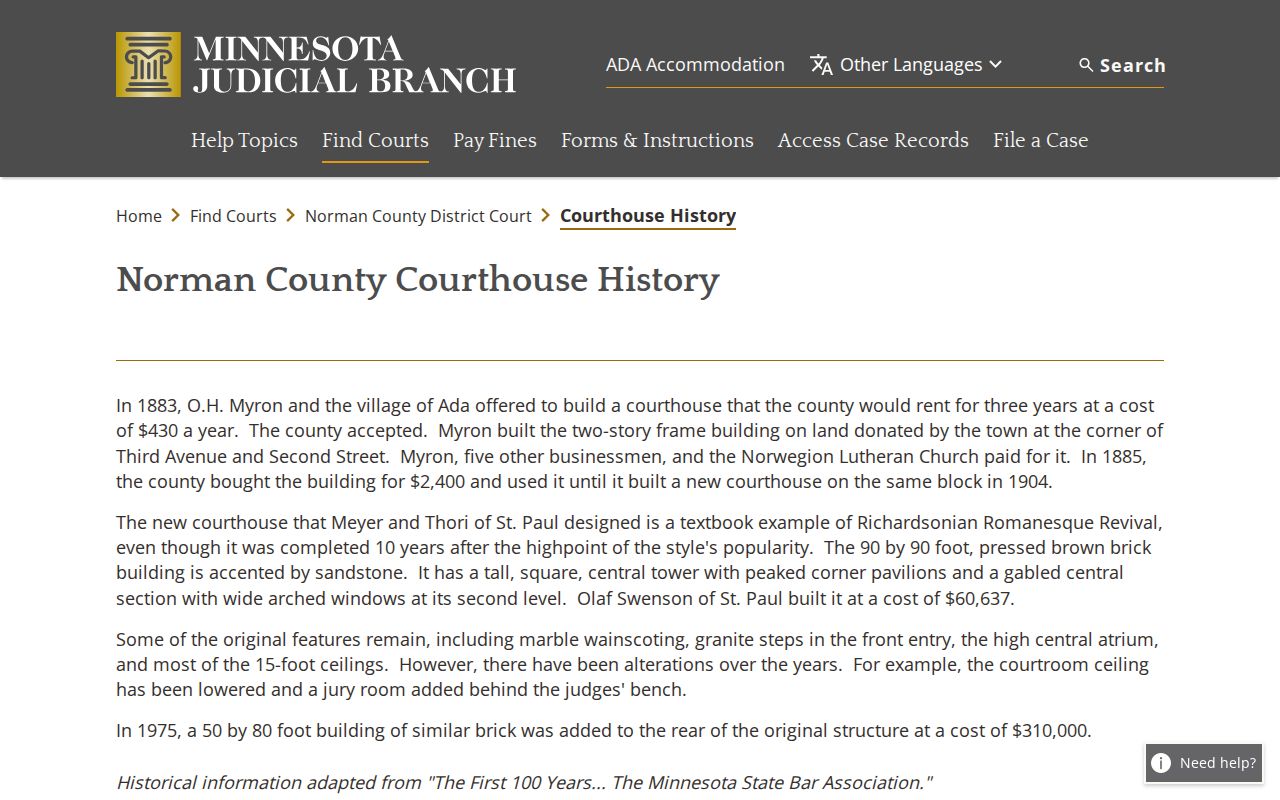
The Ada courthouse is still where Norman County court records live. County history says the current 1904 building sits on the same block as an earlier courthouse. A rear addition came in 1975. Brown brick, sandstone trim, a central tower, arched windows, granite steps, and a tall atrium give the place real civic presence. None of that history tells you where a public terminal sits or how copies get handed out today.
Old architecture and modern access are two different things. If a Norman County court docket search leads you to need a certified copy or a file you cannot view online, call Court Administration. Do that before you drive over.
Norman County Court Docket Sources
Norman County government information provides county context alongside the Judicial Branch sources.
The county-government pages help you get oriented. They are no substitute for the District Court Register of Actions or the current hearing calendar. For direct court contact and jurisdiction details, the official Norman County District Court page is the source to use.
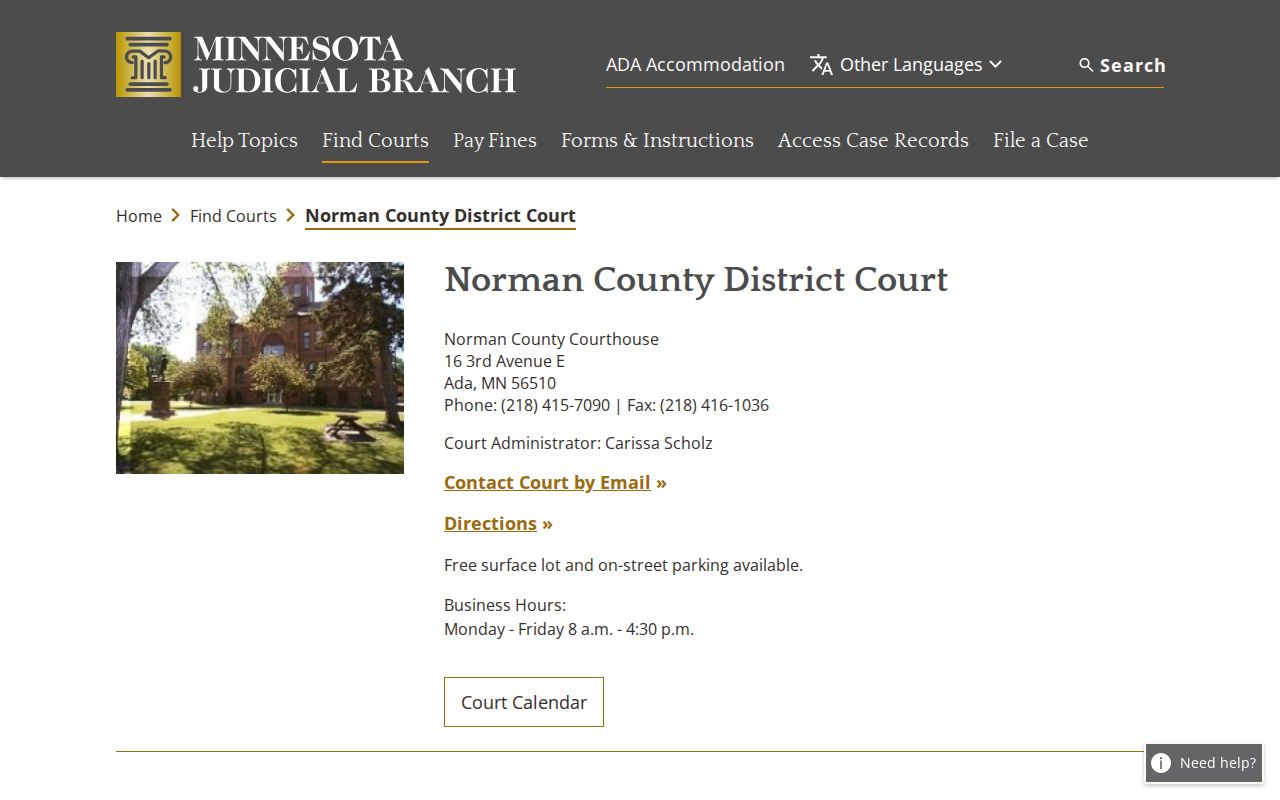
Every route in and out of the courthouse runs through that court page. Minnesota's access case records page lays out the state-level path to court record access.
That statewide path works alongside the local District Court office whenever an online result comes up short. The courthouse history source preserves the local setting behind Norman County court records.
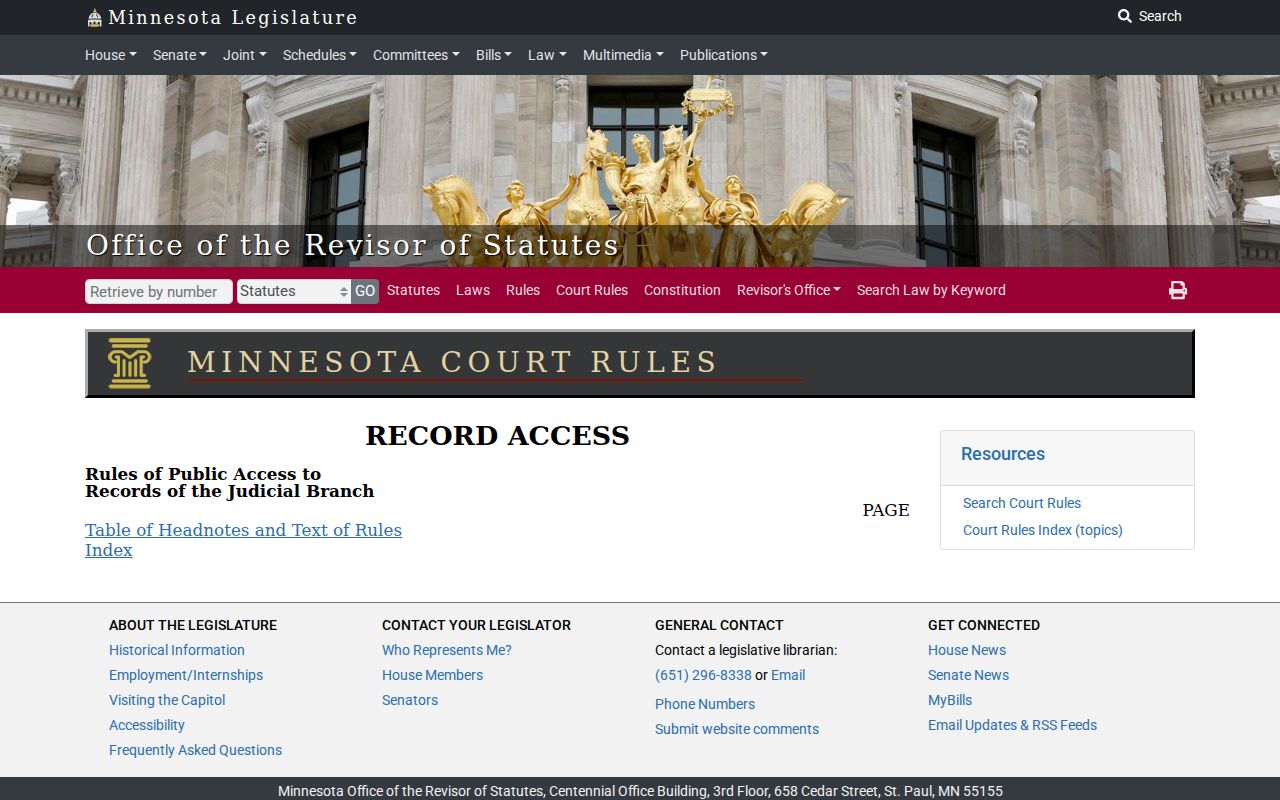
Old courthouse history fills books, but today's docket access runs on rules. Minnesota's Rules of Public Access govern every Norman County court record request, spelling out what the clerk can hand you and what stays closed.
Not every case file is open. Some records face restrictions, seals, or limits on remote viewing. Rule 4's accessibility text is the state's key word on how case records get classified, and it drives what a Norman County docket search can show you.
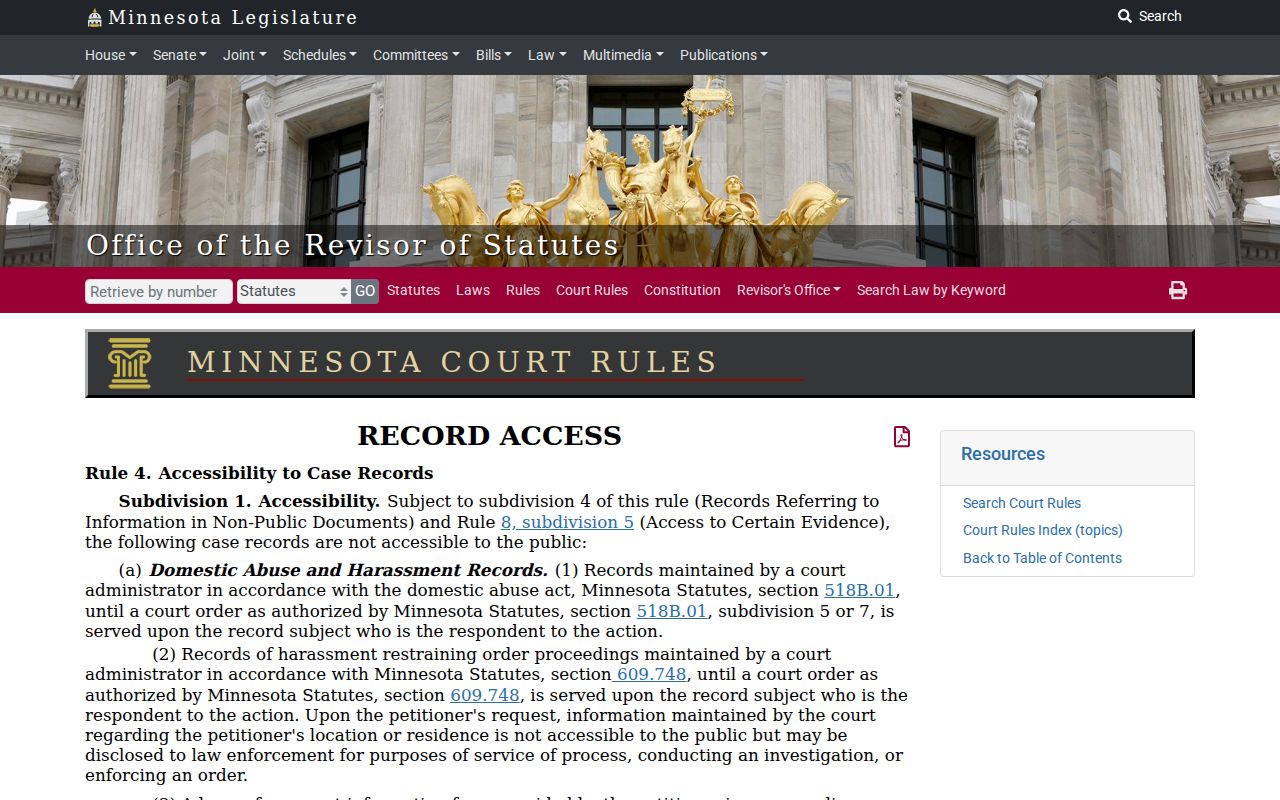
Some case details stay protected even in a public docket search, and Rule 4 explains why.
Rule 8’s inspection and remote-access text sets out the rules for copying court records and reaching them from afar.
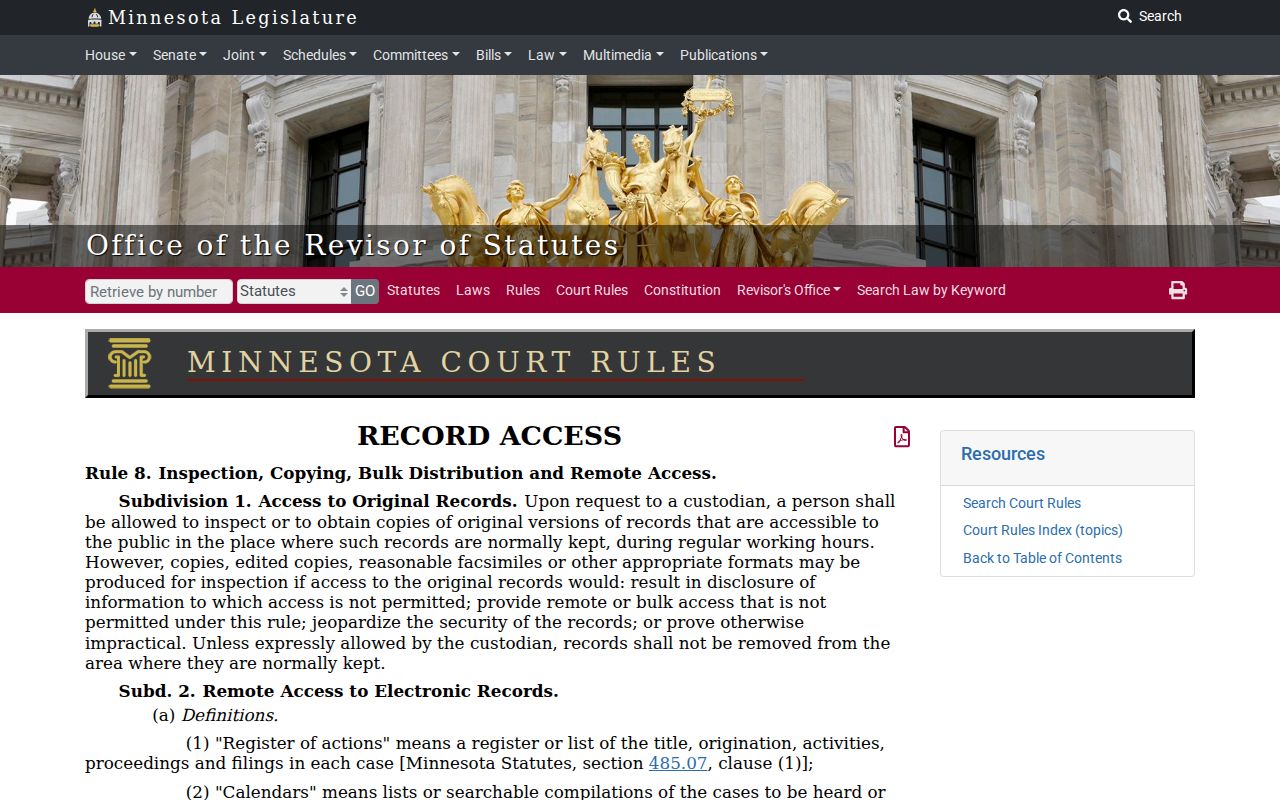
Its remote-access limits are exactly why a local request may still be needed after an MCRO search.
Map and Directions to the Norman County Courthouse
Norman County Court Administration keeps the District Court's civil, family, probate, juvenile, criminal, and traffic files at the Norman County Courthouse, 16 3rd Avenue E in Ada. The Richardsonian Romanesque Revival building dates to 1904, with a 1975 rear addition, and sits on the same block the county has used for court business since the 1880s. It remains the county's only District Court location.
Norman County Courthouse
16 3rd Avenue E
Ada, MN 56510
218-415-7090
Monday-Friday, 8:00 a.m.-4:30 p.m.
Free surface and on-street parking serve the courthouse. A new statewide order effective September 1, 2026 bars firearms and other weapons from court-occupied areas and permits screening on entry, so plan for that at the door. No public-terminal room, screening procedure, or accessible-entrance detail beyond that order is published, so calling Court Administration ahead of a visit is worthwhile.