
How to Search Civil Dockets
Minnesota Court Records Online is the statewide starting point for any Norman County civil docket. Got a full case number? Use it first. Without one, search a person or business name instead. When you know the venue, pick Norman County, then apply the Civil category filter. Do not stop at the result row. Open Case Details, because that page holds the Register of Actions with its events, hearings, documents, disposition, and judgment information for the court docket.
- Open MCRO Case Search and choose the appropriate person or business mode.
- Enter the complete case number, or use the most exact party name available.
- Filter to Civil and Norman County when those filters match the case.
- Open Case Details and record the case number, filing date, status, and document index numbers.
- Ask Court Administration about public items that are indexed but not remotely available.
MCRO cannot certify a copy or accept a filing. For those tasks, Norman County Court Administration is the right office. It answers local records questions, issues certified copies, and handles anything outside the portal. Its official court page lists the phone, counter, and courthouse contact. Use it for confirming a civil record.
Norman County Civil MCRO Filters
MCRO searches run on person, business, attorney, complete case number, or complete citation number. The Civil category and Norman location filter cut out unrelated results. Apply both for a Norman County civil matter. A name search alone is not guaranteed complete. Spell the name exactly before anything else. A trailing wildcard works after at least two characters. It cannot be combined with Sounds Like.
Once you hold the full case number, take the companion route. The MCRO Document Search source is case-number based. It will not replace a first name search of the civil docket.
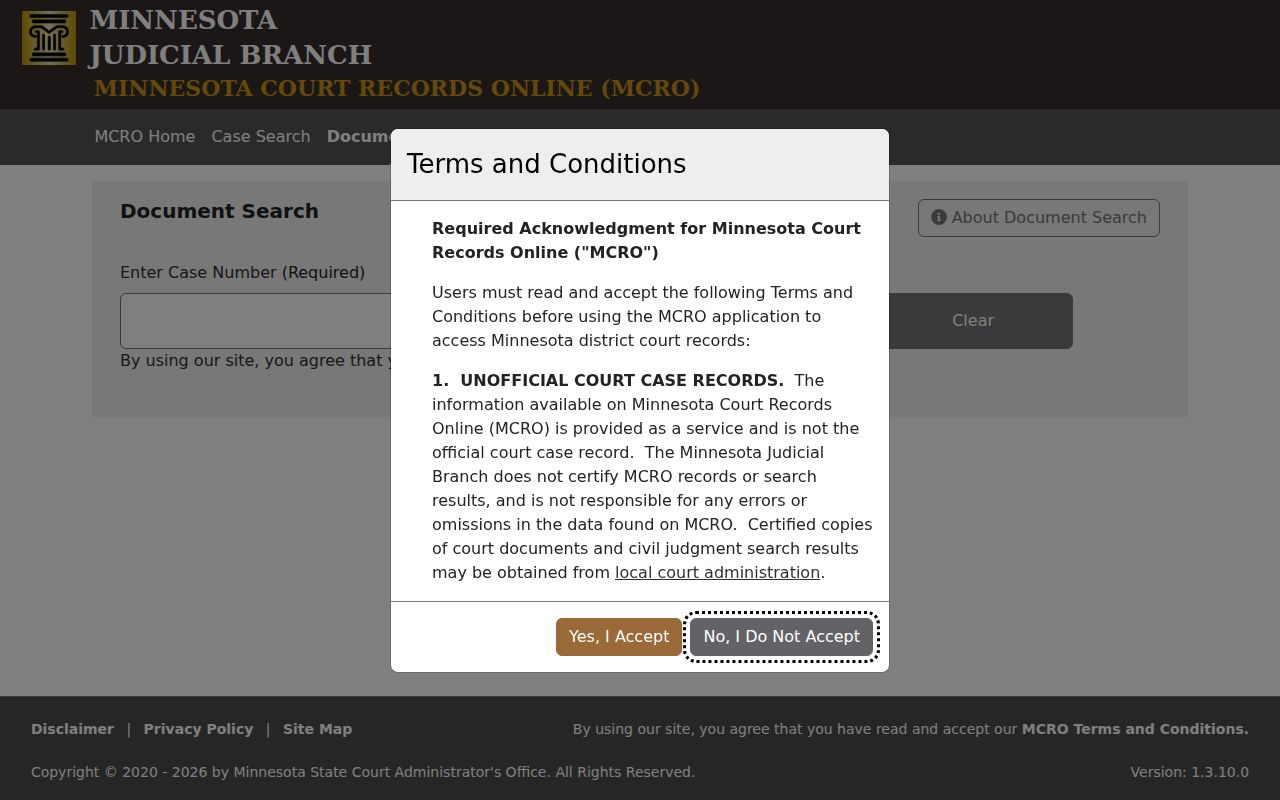
Check the document index inside the case record first. Then ask whether the public item can be viewed remotely or needs inspection at the courthouse.
What a Civil Docket Shows
The Register of Actions tells a story. It does not decide one. Case Details may list the case type, filing date, venue, party roles, judicial officer, events, hearings, documents, disposition, and any judgment or satisfaction. Read each entry for what it is. A complaint is a claim, not a ruling. A judgment is not the same as its later satisfaction.
| Case number | The identifier used for MCRO, Document Search, and a local request. |
|---|---|
| Parties | Caption and roles, which do not establish liability or a final result. |
| Events | Filed papers, orders, motions, and other dated Register entries. |
| Hearings | Scheduled court events that should be checked against the current calendar. |
| Judgment | Money-judgment or satisfaction detail when the case record displays it. |
Norman County Conciliation Fees
Minnesota's version of small claims is called conciliation court. The Norman fee table lists a $75 first-paper fee to open a conciliation case. Removing a case up to District Court costs $320. A jury demand raises that to $420. Those lines are set filing fees for each category. They are not a forecast of what any one Norman County case will cost.
No Norman-specific conciliation packet or local hearing archive appears online. Ask Court Administration before you file. It can confirm the current form, the filing route, payment method, and which fee category applies. Use MCRO for searching public records. Filing itself goes through Minnesota Judicial Branch eFile and eService for authorized users.
Types of Civil Cases on the Docket
Norman County District Court holds original jurisdiction over civil cases filed in the county. That covers most civil disputes locals bring to the courthouse. In MCRO, Civil is its own search category. Family, probate, and mental-health cases sit in separate buckets. Check which category you picked before reading results. Remote document access differs across the court's case types.
| Civil record | What the Register can show | Access point |
|---|---|---|
| Major or minor civil case | Filings, events, hearings, orders, disposition, and judgment history where public. | MCRO Case Details, then Court Administration if needed. |
| Conciliation case | Case history and court events after filing. | MCRO with the local filter and case number. |
| Family-related record | Public case history with narrower remote document availability. | MCRO plus Rule 8 and local confirmation. |
Norman County Civil Judgment Search
MCRO Judgment Search indexes docketed money judgments and satisfactions. It runs on judgment-specific fields. Even so, it cannot fully replace Case Details. Open the underlying civil case to see the event history, the disposition, and any satisfaction that follows the judgment.
Judgment Search offers its own statewide route. A Norman County court record may hold more history than the judgment result shows. And an online result is never a certified judgment.
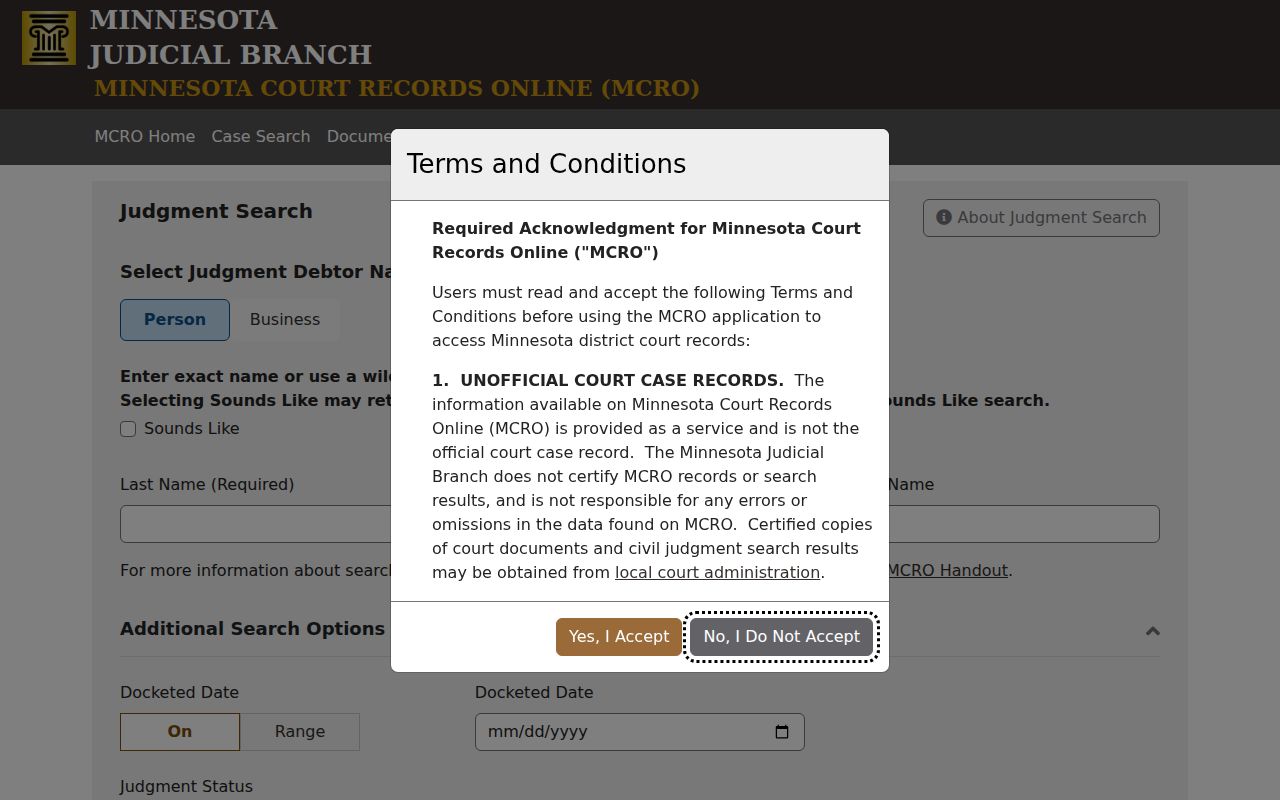
For a certified copy, know the case and the exact document first, then contact the local court office.
Settings and Hearings on Civil Dockets
A civil hearing shows up as an event. It may also appear through MCRO Hearing Search or the Norman daily calendar. The PDF posts at 7:00 a.m. each business day. It gets hourly updates. Use it for a current setting; use Case Details for the fuller Register of Actions.
Printed calendars hang outside courtrooms and in public lobbies. Those are marked as the most current version. A missing PDF entry does not mean a hearing was cancelled. Confidential and nonremote matters stay off the posted docket. When a notice, the calendar, and the online case entry disagree, call Court Administration.
Norman County Civil Document Indexes
A document index is not the same as a downloadable document. Rule 8 allows remote access to public documents in major and minor civil cases. Trial exhibits are not remotely accessible, and family-related documents face narrower rules. So an index line may point to a filing you must inspect in person. It may point to one that is not public at all.
Word any request precisely. Give the case number and the document index number. Add the date range, and whether you need an uncertified or certified copy. Court Administration can tell you whether a category is remote or requires a visit. The county posts no set copy-request form or turnaround time.
Public Access to Civil Dockets
Public inspection of Norman County civil dockets rests on the Minnesota Rules of Public Access plus the Minnesota Government Data Practices Act, Minn. Stat. § 13.03, working alongside court-specific rules. The statute sets a baseline. It guarantees general inspection and copying. That right stops at sealed, confidential, restricted, or nonpublic court records, and Rule 8 governs how remote access to court records actually works.
Rule 4 identifies nonaccessible and restricted court-record categories.
Rule 8 governs inspection, copying, and remote document access.
Minn. Stat. § 13.03 describes the general public-data inspection and copy framework.
Norman County Civil Remote Access
Remote access runs narrower than a walk-in inspection at the courthouse. Under Rule 8, public major and minor civil documents may be viewable online. Family-related cases get tighter treatment. There, remote viewing can shrink to orders, opinions, and notices the court itself prepared. A public case history can still exist. Even so, affidavits and trial exhibits may never appear as downloads.
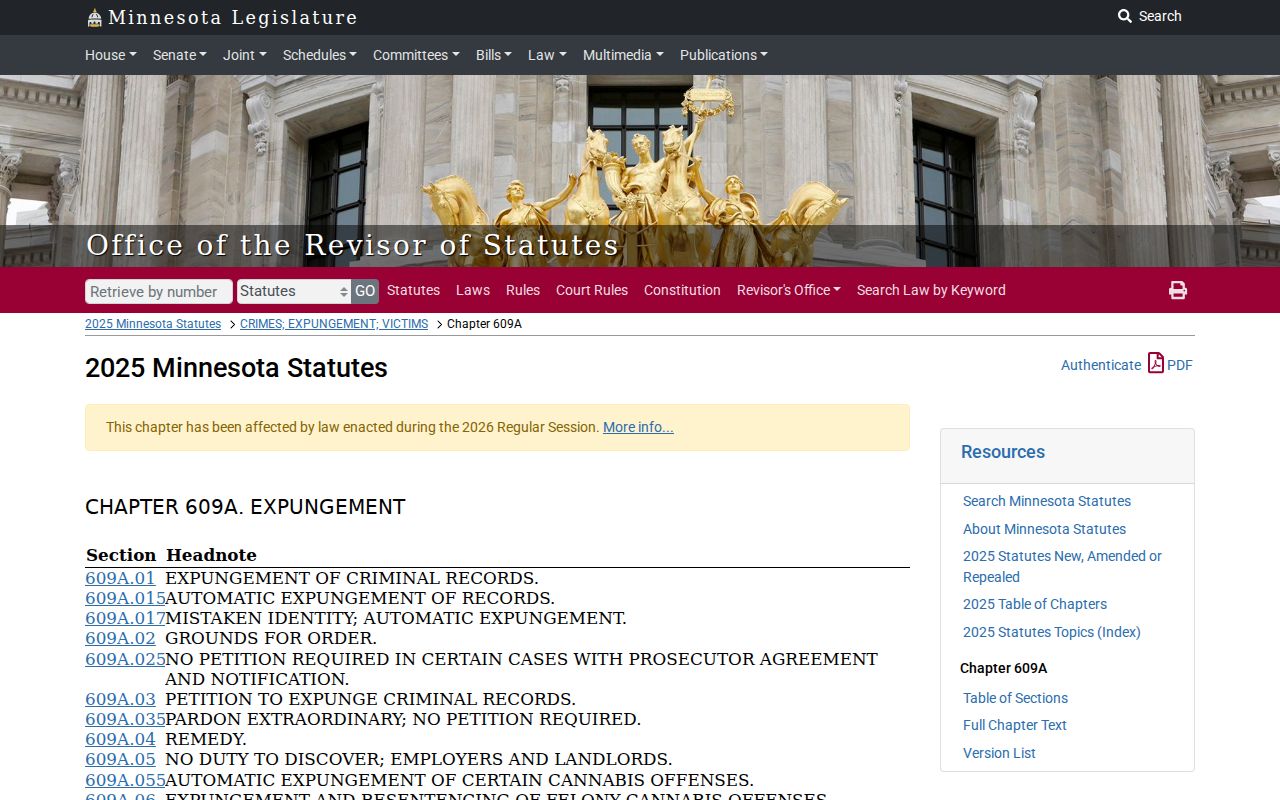
Minnesota's expungement framework shows why accessibility can shift. Law or a court action may change what a record exposes. Ask first. The court can say what may legally be inspected or copied. Do not assume an indexed case puts every filing on public display.
Court Administration covers older, certified, or courthouse-only civil records.
Norman County Civil Copy Requests
Norman County Court Administration sits at 16 3rd Avenue E, Ada, MN 56510. The public phone is 218-415-7090. Listed hours run Monday through Friday, 8:00 a.m. to 4:30 p.m. The counter handles in-person inspection, and state rules require public-access terminals at district courthouses, though Norman County posts no terminal room or assistance procedure. Start your docket search online. The fee table lists $14 for specified certified copies. $0 applies to the displayed uncertified categories. Confirm the current fee and delivery details before you pay.
Norman County Civil Filing Routes
MCRO is a public records-search system, not a civil filing tool. Filing runs through Minnesota Judicial Branch eFile and eService, called eFS. Norman County got eFS on October 26, 2015. That was part of the Ninth Judicial District rollout. E-service serves parties and counsel in a case. That is separate from public access to a court record. An e-filed document may appear in MCRO. That happens only when the case type, the date, and Rule 8 conditions allow remote access. A document index without a visible attachment shows neither a missing filing nor a publicly viewable one.
Norman County Civil Record Limits
A name result, a court role, or a case status is never a finding of liability. A missing online result has many causes. The record may fall into a restricted category. The search may be incomplete, or remote-access limits may block it. Federal civil dockets live elsewhere. Search those through the federal PACER and CM/ECF system, not MCRO.
For a state case, keep the online Register of Actions apart from the full court file. Case Details may show that entry. The document can follow a different access path. That gap matters most for older material, protected information, and anything that needs courthouse inspection.
Write down the search date, full case number, and document index number before contacting Norman County Court Administration.